Photos – Dave McLeod’s Otter Creek and Ripton
Back in the 1870s and 1880s the country was gripped by “Narrow gauge fever”. This malady resulted in slim lines in almost every state, and Vermont was not immune. The West River, as well as the Hoosac Tunnel and Wilmington are well known, but the Otter Creek and Ripton is an obscure line. The simple reason for this obscurity is that it only exists in my basement and my imagination. The On30 layout takes up about 800 sq feet and depicts a line linking the mountain communities of Rochester and Ripton in 1910. The story goes that the area’s folks wanted, in typical New England fashion, a thrifty way of opening up their country and connecting their towns. The answer was a slim gauge line, but which gauge? Three feet was all the rage, but one resident of Ripton, Phineas Whittinghorn, had made it all the way to the Maine woods and had ridden the shiny new Sandy River. The idea of a little two-footer promised big savings, but many were skeptical that this was a bit too toylike. After many meetings, the townspeople and developers settled on a compromise of 30 inches. The rails were laid over the spine of the Green Mountains and the line made a good living, despite the challenges of stiff grades and fierce winters.
The track plan is rather simple as having more than one main track in a scene would ruin the illusion of a bucolic shortline. It is a point-to-point operation using peninsulas as well as a balloon track at both terminals, Rochester and Ripton. There are also wyes at Rochester, the interchange point, and Texas Falls, a midway station that hosts the geared locos of the Vermont Talc and Timber Company. This concern hauls marble via a switchback, and logs and talc from a camp up on a hillside.
Speaking of locomotives, the OC&R mostly uses Bachmann products, but the majority have been seriously sliced and diced. The best (or worst) examples are the pair of 2-4-4T Forneys that I nipped and tucked in three spots to turn them into 0-4-4Ts. The original engines, although attractive, were almost totally incapable of coupling and uncoupling as the overhang was excessive. The shortened versions are far more reliable. However, cutting the frame of a loco into 3 pieces and splicing it back together is a bit nerve wracking.
Another Frankenstein contraption is a 2-6-2 that is cobbled together from an Australian Puffing Billy chassis, a boiler and cab from a brass model of SR&RL #18, and a Bachmann tender.
About half of the rolling stock is Bachmann, but I have scratch built a series of pulpwood, box and flat cars using resin cast frames. The passenger stock represents Concord Car Company board and batten cars constructed from home made resin castings mixed with Bachmann underframes and roofs.
Scenery is mostly complete, although never really finished. There is one thing about a New England theme; one can never, ever have enough trees. I use a variety of materials for my forests as well as ground cover. Nature is a jumble of colors and textures, shapes and sizes, and modeling this really enhances authenticity. All the structures are scratch and they represent the typical Victorian style architecture of the era. I have always found this period extremely charming and its legacy still shapes the towns of the Green Mountain state.
The layout was also featured in the 2018 issue of “Great Model Railroads.” Here is the link, though it can only be accessed by paid subscribers.
https://www.trains.com/archives/special-issues/great-model-railroads-2018
Here are a few photos of this fine layout!
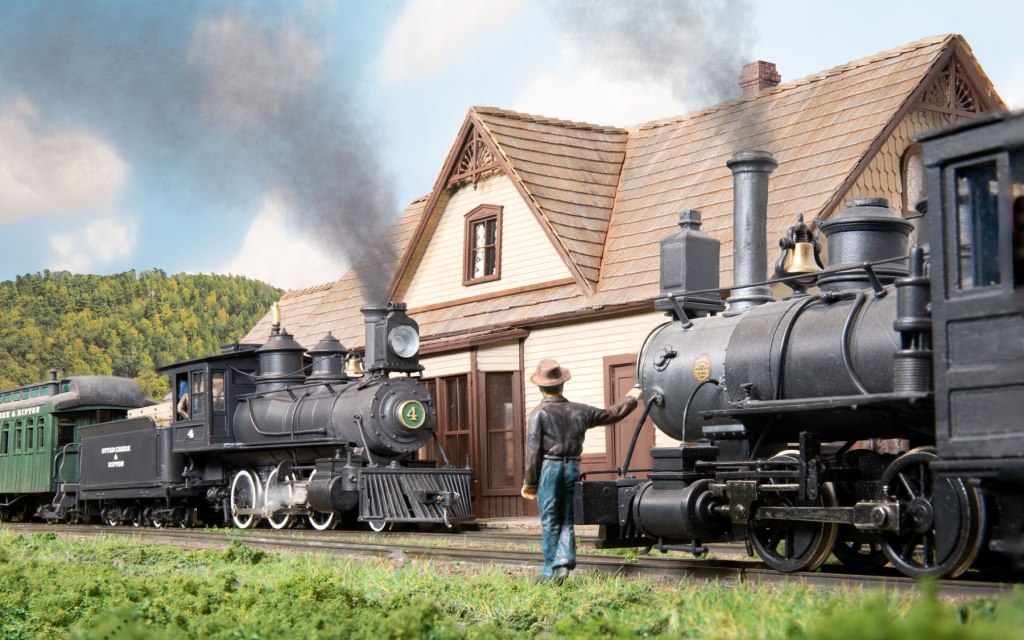
Photo 1: The crew of #1 takes a break from switching duties while they watch the morning passenger leave Rochester. The #4 is a Bachmann mogul chassis married to a wagon top boiler from a 1960s brass On3 Spartan Series 4-4-0.
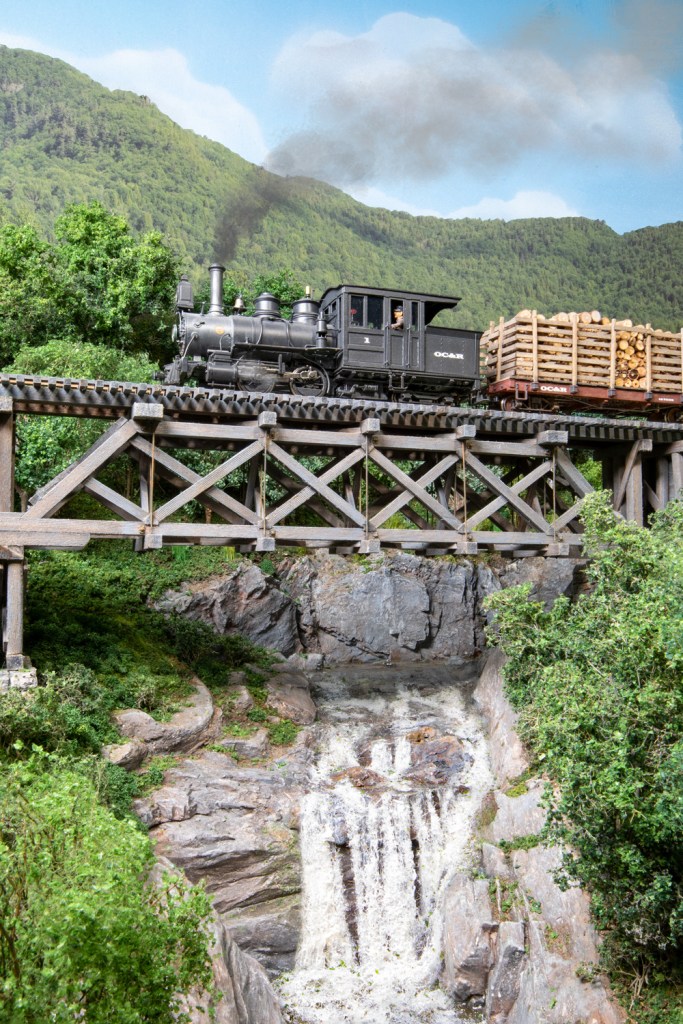
Photo 2: One of the scenic highlights is the route through Ripton Gorge and is one of the reasons that the railroad is so popular with tourists. The bridge is scratch built and the loco is a shortened Forney. The pulpwood racks are a hallmark of northern New England lines.
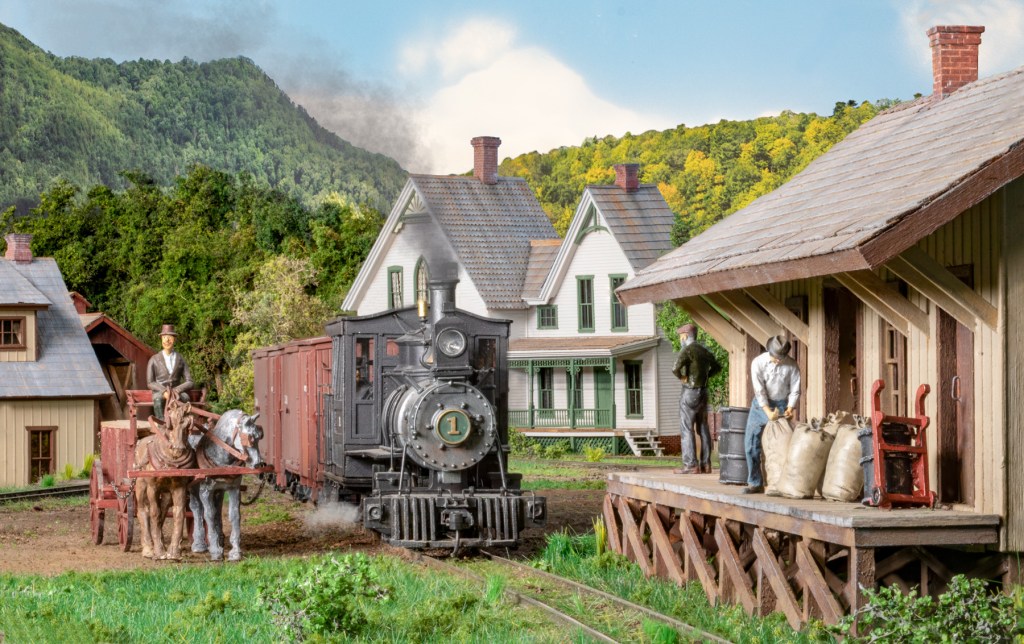
Photo 3: On a lovely September afternoon, #1 brings a pair of boxcars for spotting at the Ripton freight house. In the background is a covered bridge, another iconic part of the state’s image. The owners of the gingerbread house were a bit perturbed when the railway took over their yard, but they have learned to live with it and have even come to regard the little line with affection.
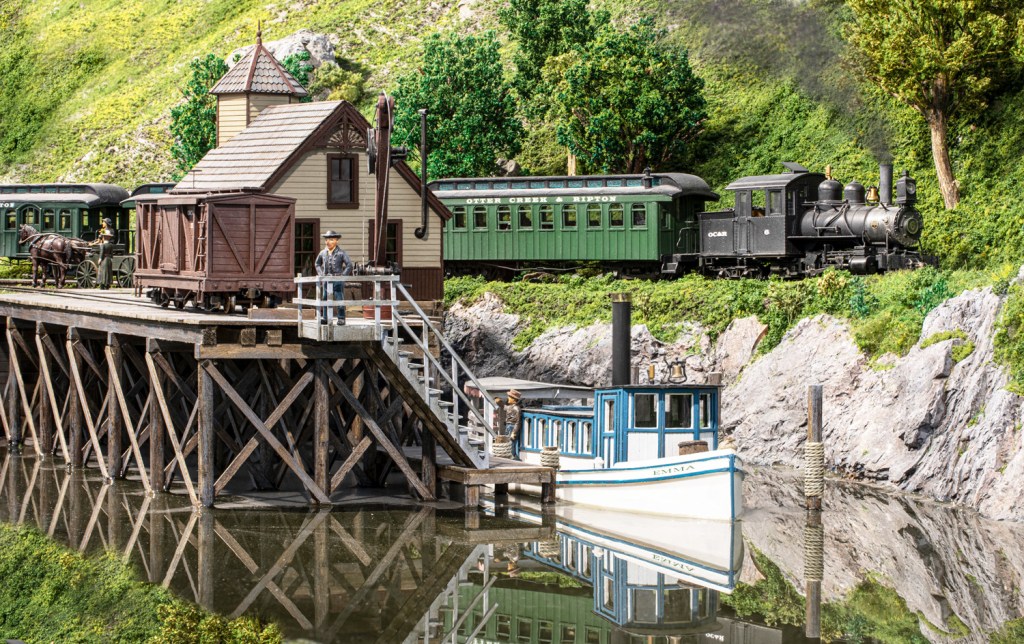
Photo 4: The depot at Silver Lake is a busy place during the “rusticator season” when flatlanders arrive to sample the cool delights of the Vermont hills. Emma, the little steamboat, plies the tranquil waters, bringing tourists and supplies out to the summer resorts that dot the lake.
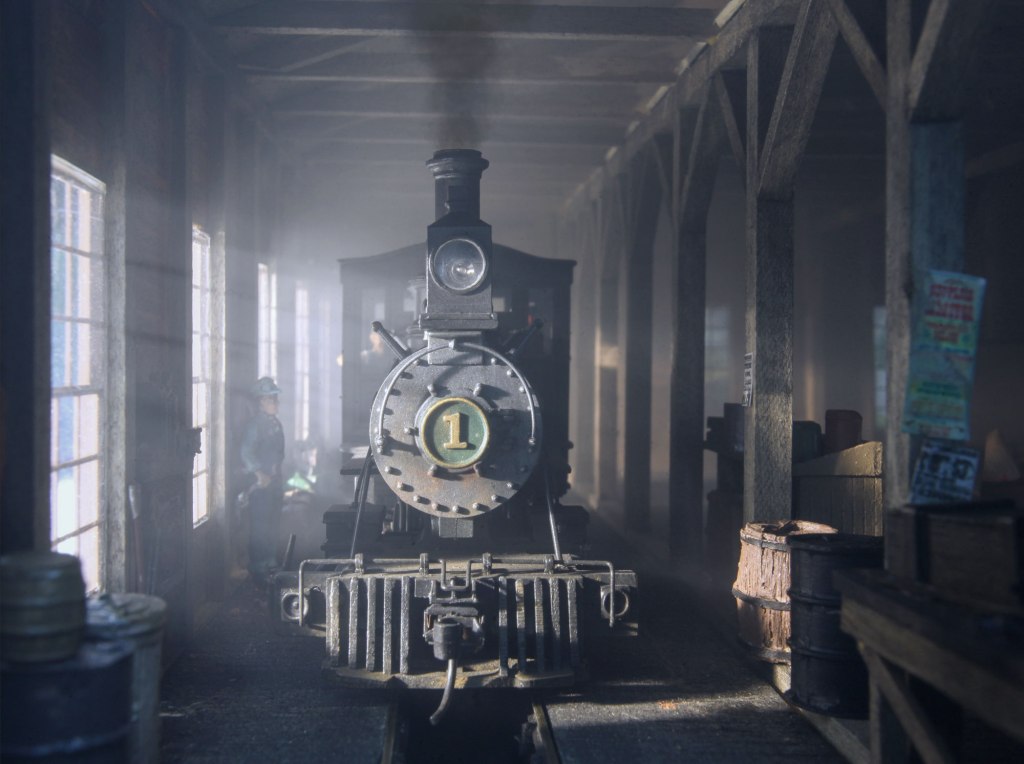
Photo 5: In a haze of her own making, #1 is getting groomed and fired up for the day’s work. The grades of the OC&R are demanding, but the little 0-4-4T always seems to meet the challenge.
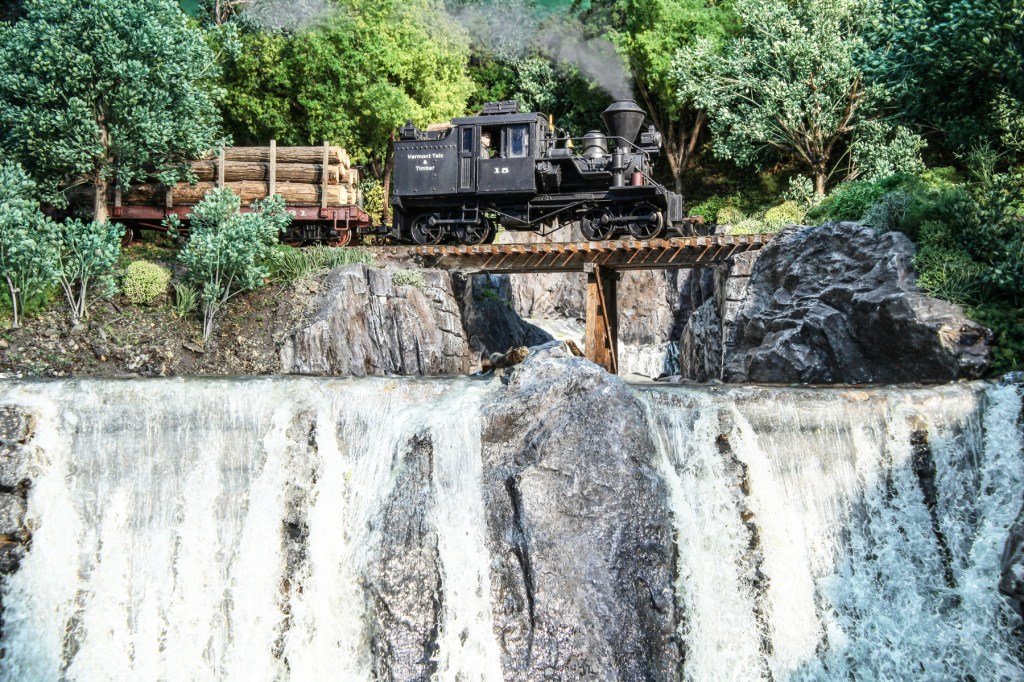
Photo 6: Rolling over Texas Falls, Heisler #15 of the Vermont Talc and Timber Co is bringing another load of logs down from the hills. The waterfall was constructed using my own technique. Saran Wrap was stretched from top to bottom and coated in many layers of gloss medium. Aquarium filter fiber was stretched and affixed with more medium and highlighted with dry brushed slightly off-white paint, Finally, a bit more gloss restored the shine to the highlights. This project took quite some time; I was not happy with the first three attempts and tore them out. The fourth time was the charm.
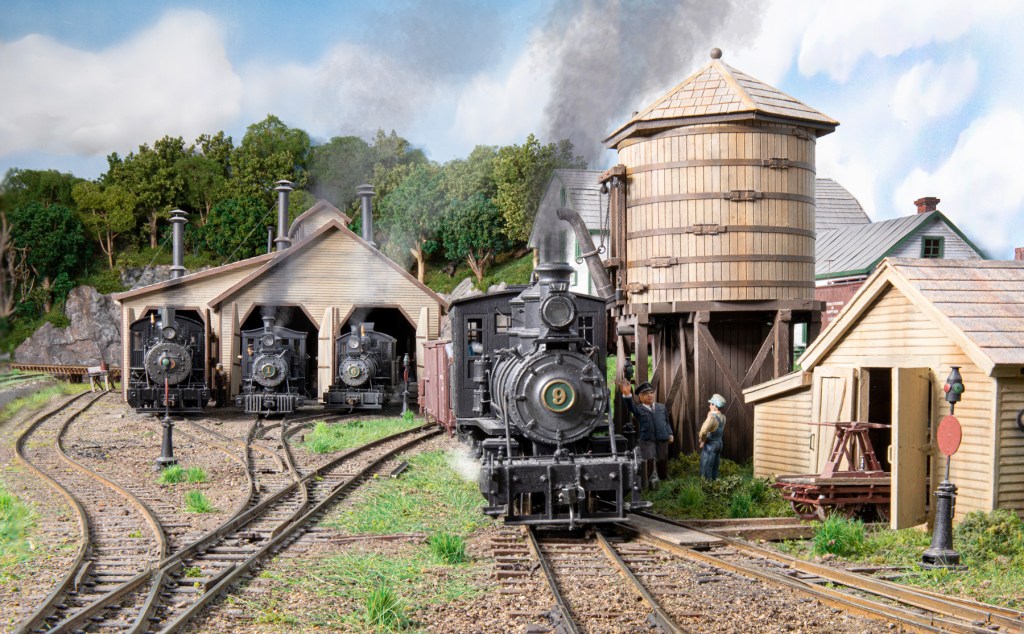
Photo 7: Things are really hopping down by the old Ripton engine house as a trio of iron ponies get fired up. After a very early start from Rochester, #9 is coming in with a way-freight after battling the grades over the Breadloaf Pass. This loco, a BLI 2-8-0, spent much of her time derailing, which was a very common complaint about this model. The OC&R shop crew gave her a chop job and she is now a 2-6-2. Problem solved. The engine house has since been turned into a car shop and a new turntable and roundhouse have been built, which has greatly pleased the shop crews.
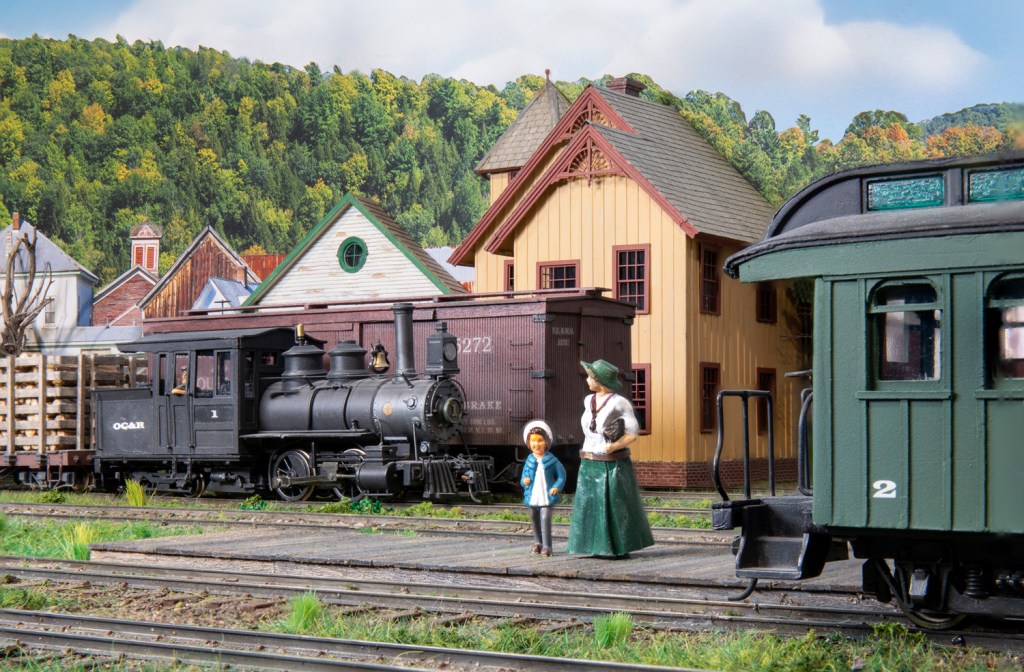
Photo 8: The morning passenger job is about to head up to Ripton and this little girl is excited about her first train ride. Mom is a bit more blasé, but she still is interested enough to watch the #1 put together a freight job that will follow their train up the mountain. The backdrop is 11 feet long and is a photoshopped collage of about 30 different images that I shot around the state.
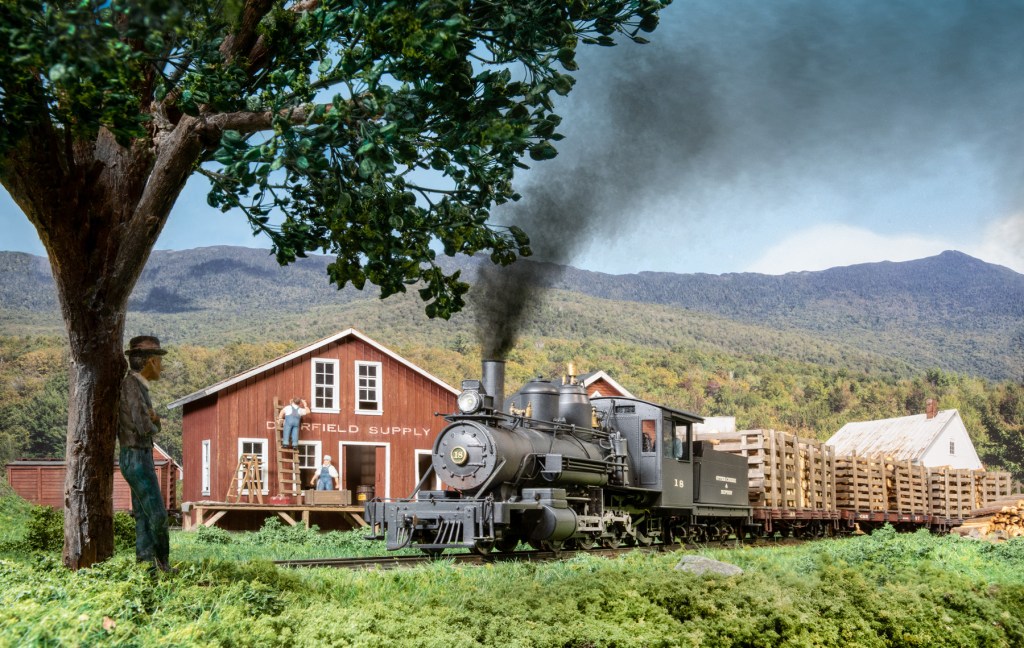
Photo 9: Texas Falls is the busiest way station as it is the interchange with the Vermont Talc and Timber lines. There is a hint of fall colors up in the hills, and in a few months the little engines will be battling the snows of another frigid Vermont winter. In the meantime, it is a nice opportunity to take advantage of the shade and watch the train roll out of town.
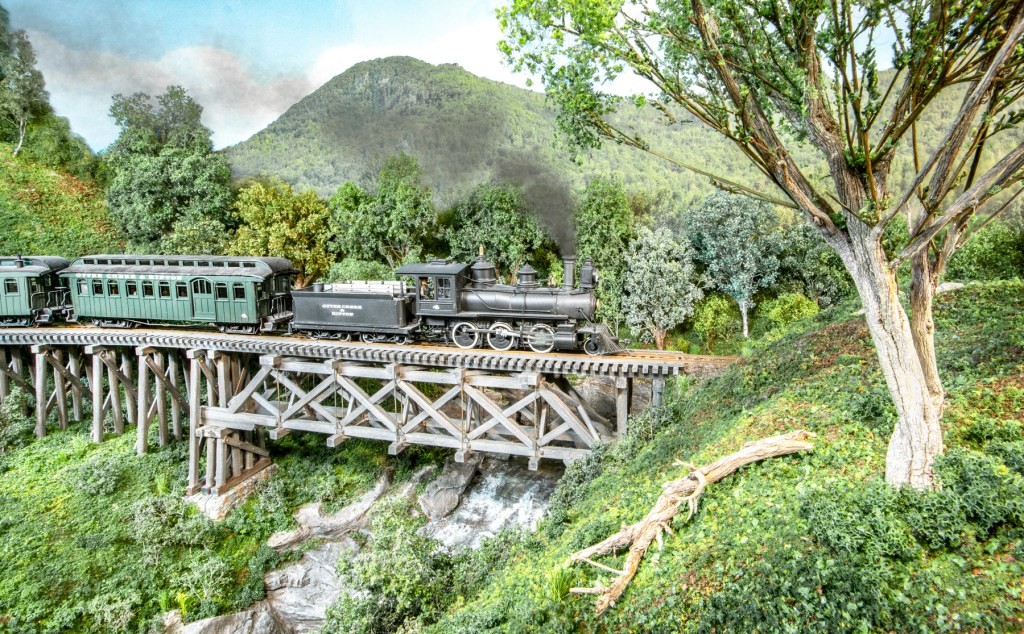
Photo 10: The morning Ripton run eases over the high bridge at Ripton Falls. The crews slow down to give the passengers a chance to drink in the lovely Vermont scenery. The tree has a sagebrush trunk and caspia stripped of foliage for the branch structure. Next is a very fine layer of polyfiber finished with super leaf by Scenic Express.
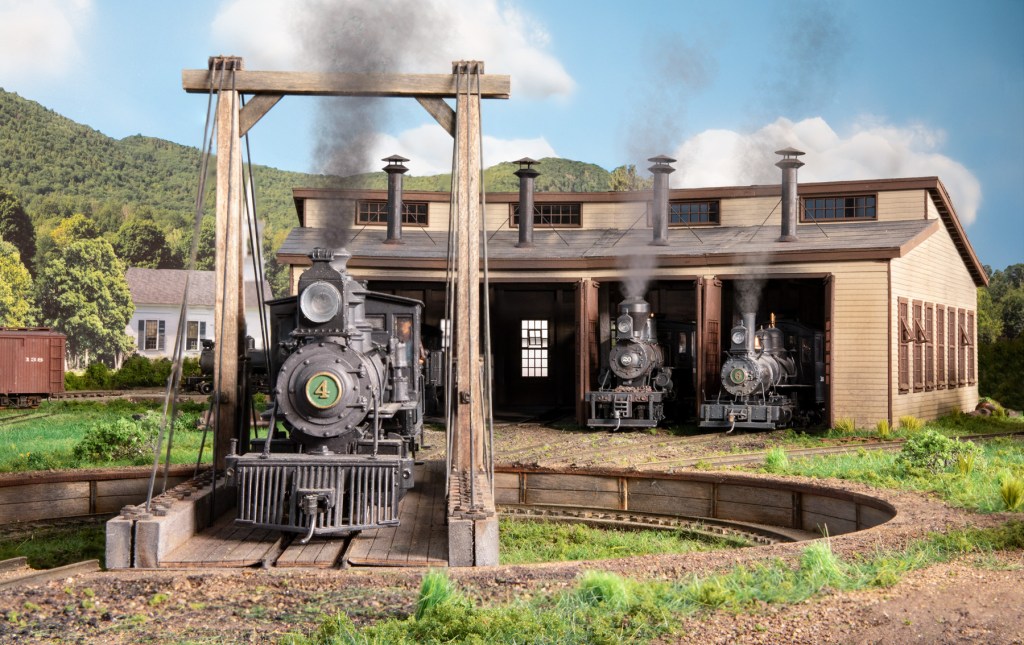
Photo 11: The new roundhouse at Ripton is hosting a variety of power today. Mogul #4 takes a spin on the table while Forney #6 gets steamed up. Vermont Talc and Timber Climax # 20 is a visitor. She was in need of work beyond the abilities of her home road, so the OC&R has done the job.
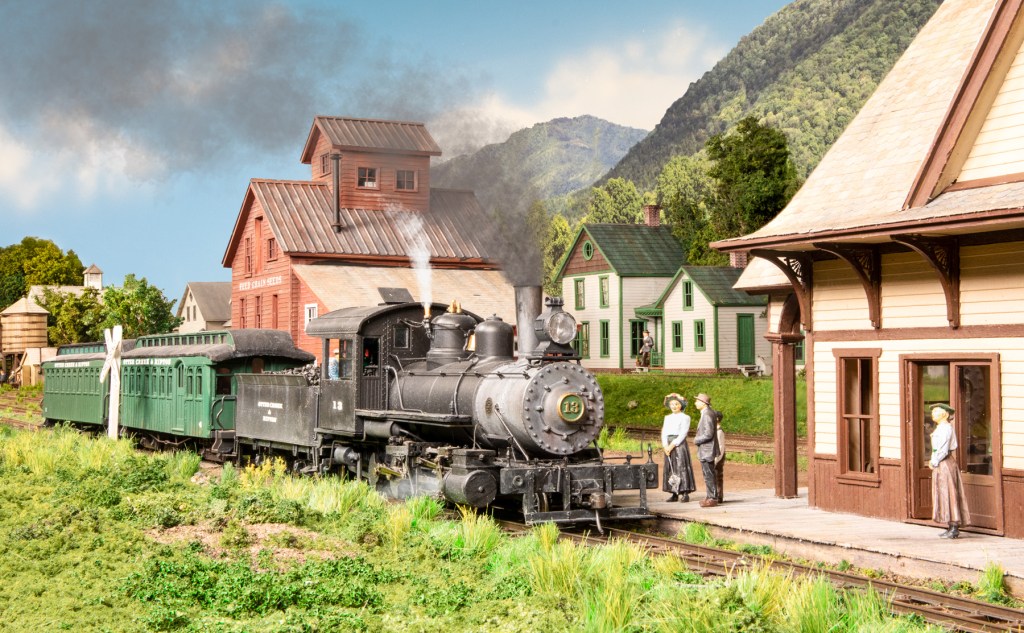
Photo 12: The OC&R’s big power, consol #13, is in charge of the passenger job as she arrives in Ripton. Usually, she is assigned to heavy freight and shows the wear from this service. # 4, the regular engine, has suffered a breakdown and her big sister has come to the rescue.
 NWV Model Railroad Association